Trader Stories: From Down $96 to Up $224 — Why Nina Cut Her BTC Trades in Half
A shift worker switched off most of her price alerts and began checking Bitcoin just twice a day. She missed a rally she had called, then finished the next two weeks back in profit.
 AiXFundedAiXFunded Official Team
 5 min read
 10 views
Key Takeaways
- Nina improved her BTC trading by cutting unplanned trades.
- Planned trades netted $352; unplanned trades lost $32.
- Nina's account gained $224, resulting in a $179.20 payout.
- She adjusted her trading schedule to align with work shifts.
Nina is a shift worker on a factory line and a relatively new crypto trader. Her life is sliced into fragmented pieces by time clocks and shift schedules, but that never stopped her from staring at 15-minute BTC charts, trying to make some extra cash in the volatile market.
Act I: The Impulsive "Three-Punch" Combo
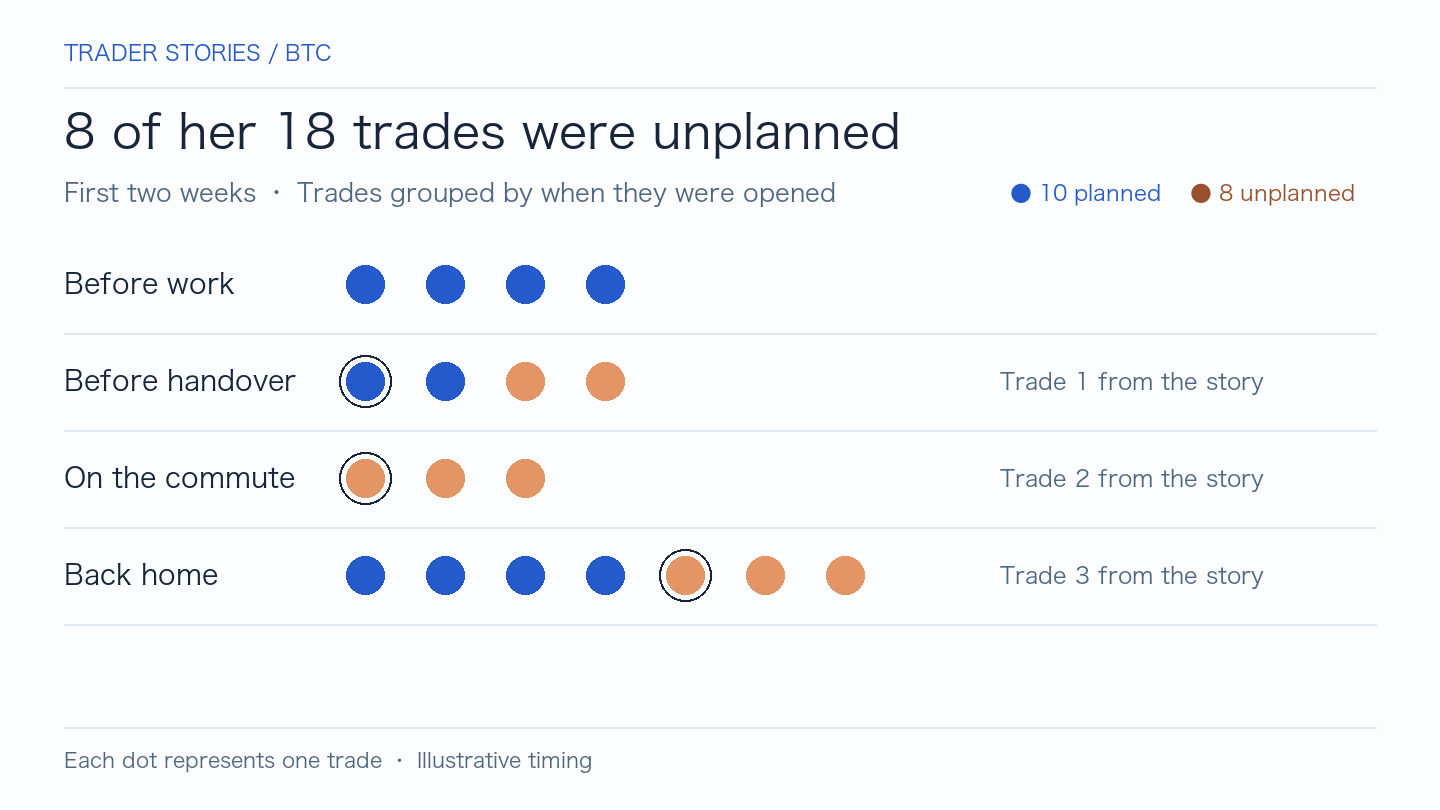
That day, ten minutes before the shift handover, Nina was hiding in the break room. The glow of her phone screen reflected on her face. Bitcoin had just broken through a key resistance level she had marked during her morning break. Without hesitation, she opened a long position, shoved the phone back into her pocket, and walked out to the factory floor.
By the time she reached the bus stop, her first long had been stopped out. But seeing the price bounce, she refused to let it go and bought again. Once she got home, a single thought echoed in her mind: “It has to keep going up.” She placed a third trade.
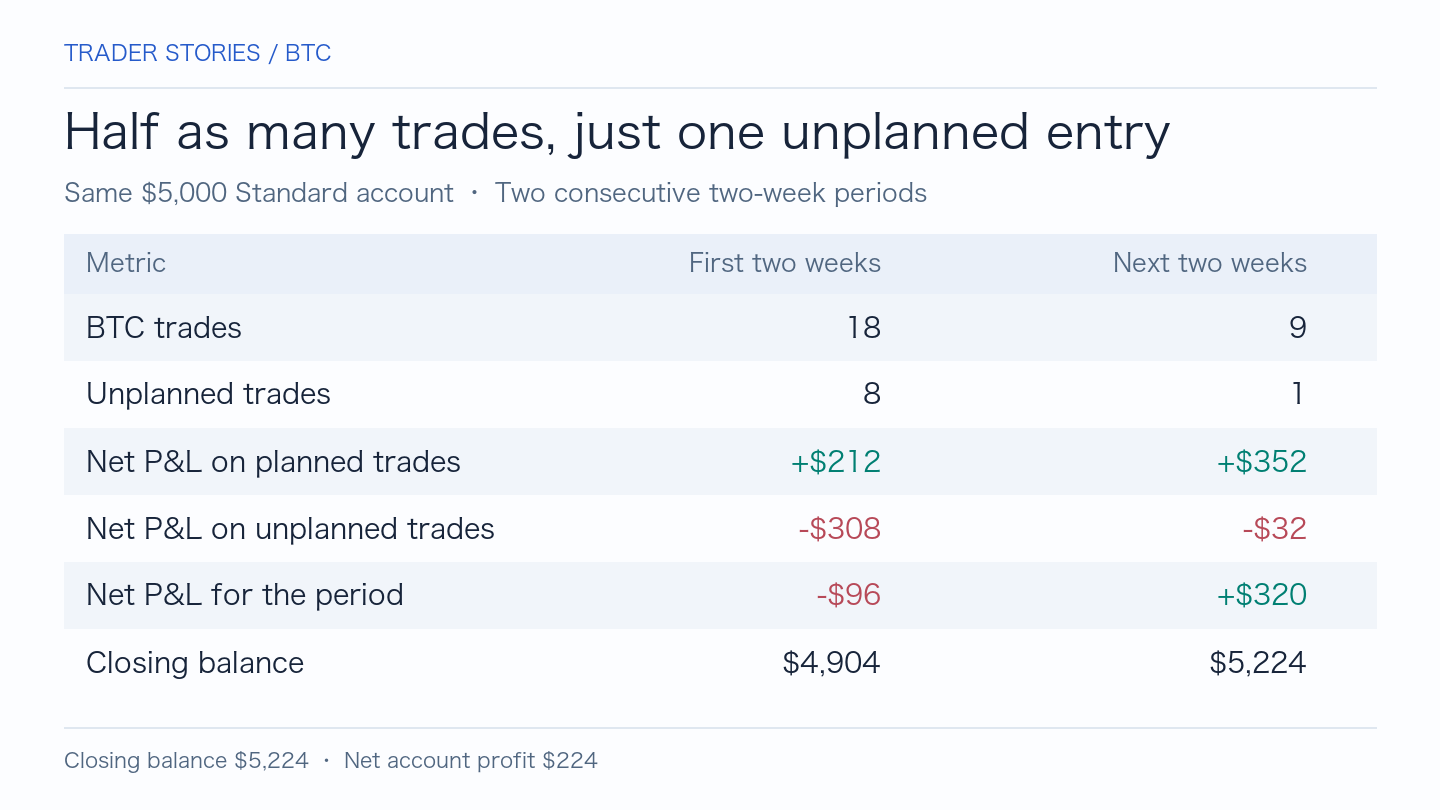
Late that night, Nina stared blankly at the three messy entry points on her trading app. She pulled up the past two weeks of records on her $5,000 Standard account: 18 BTC trades in total. Ten of them were "planned trades" she had written in her notebook before opening them, which netted her $212. The other eight were impulsive, off-the-cuff trades that wiped out $308. The net result: her account was down $96.
Act II: Turning Off Alerts and Putting Trading in a "Cage"
Looking at the losses piled up from her impulses, Nina realized something: on the assembly line, if a machine doesn't follow protocol, there's an accident; in trading, an unplanned order is just pure gambling.
The first thing she did was turn off all those beeping "price alert" notifications on her phone. Since her schedule was completely irregular and she never had time to watch the charts at 8 p.m., she gave up the illusion of "staring at the market anytime, anywhere." She tied her chart-checking schedule strictly to her shift roster: before work, she would mark the day's trading range and write down her trading plan; after work, she would only confirm if the setup was still there, and then immediately go to sleep.
Act III: The "Withdrawal Symptoms" of Missing a Move
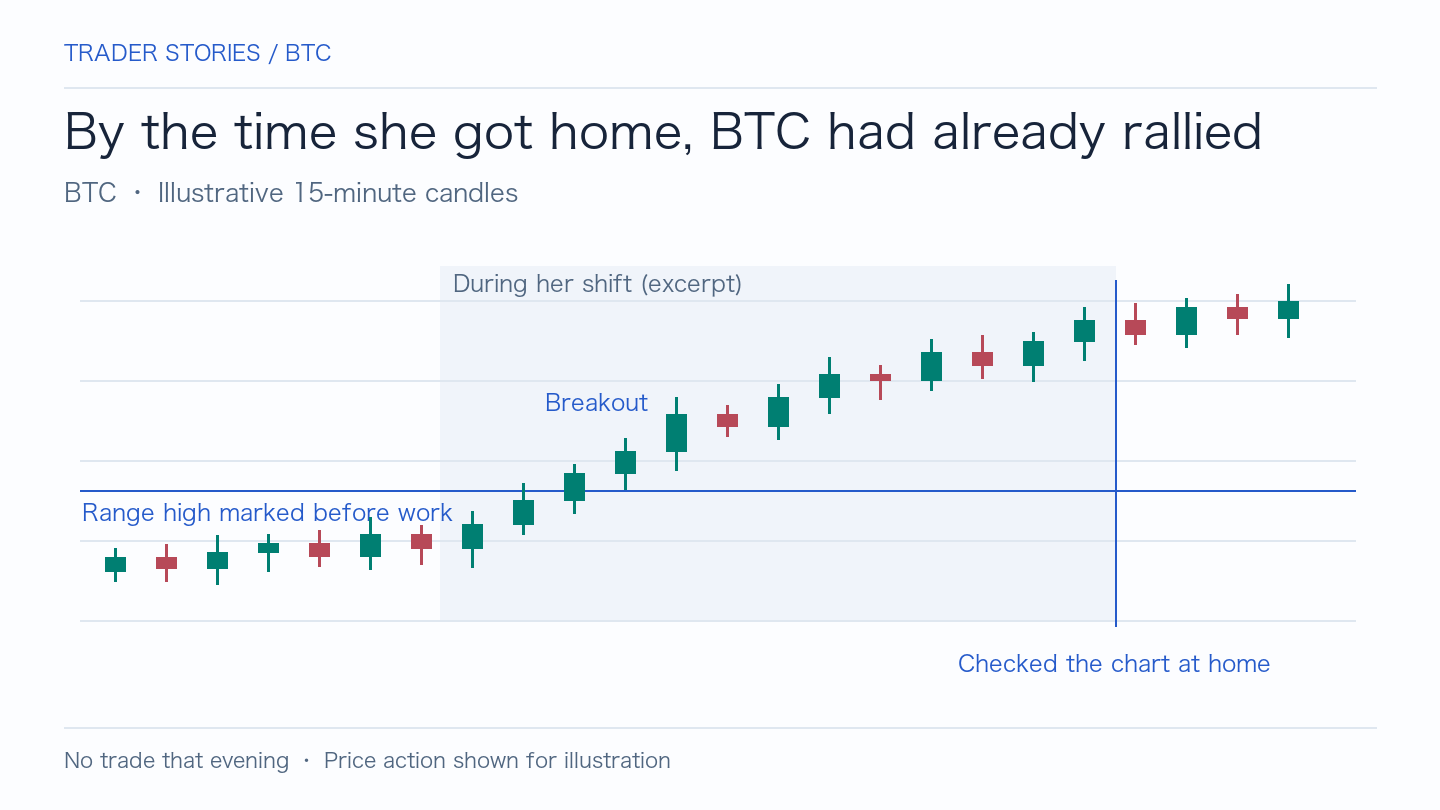
Change is always painful. A few days later, she marked the top of a range before a late shift. While she was busy on the factory floor, BTC broke out of the range and surged.
When Nina got home and opened the chart, the price had already flown to the moon. Instinctively, she wanted to chase it, but looking at the new price level on the screen, she couldn't find a single sensible place to put a stop loss. She stared at the chart, zooming in and out, and finally forced her hand away from the buy button.
She wrote in her journal: “I got the direction right, but my entry point is gone.”
Two weeks later, she counted the unplanned trades first
Nina had taken nine trades. Eight matched plans she had written beforehand. The one she took on the fly lost $32. The planned trades netted $352, including three losses. She finished the two weeks up $320.
he next day, BTC kept rallying. Nina felt like a cat scratching at her heart. She replayed the chart over and over, trying to find a way in, but she held back. She didn't place a single order.
Act IV: Less is More — The Reward of Restraint
Two weeks passed. This time, when Nina looked at her trading history, the numbers had changed.
She had only taken 9 trades in two weeks—cutting her frequency in half. Eight of them strictly followed her pre-market plans; only one was impulsive (and lost $32). The eight planned trades, despite taking 3 stop-outs, netted her $352 in profit.
Adding up the $96 she had lost before, Nina's account had not only filled the hole but was now up $224. Her account balance had climbed steadily from $4,904 to $5,224. Based on the platform's 80% profit split, she received her first payout of $179.20.
Regaining Control of Life
The day she received the payout notification, Nina was sitting at her desk filling out next week's shift schedule. Wednesday was assigned as a late shift, so she deftly moved her "second chart-check" to after work.
She glanced at her phone. The gap she used to fill with constantly refreshing charts on the bus was now a quiet time for rest. Nina knew that what truly kept her alive in this market wasn't catching every single rally—it was learning to sit comfortably with the trades she intentionally missed.